

Is It Safe to Use a Password Manager in 2026? by Hazel Shaw


Updated on: February 7, 2026
Fact-checked by Katarina Glamoslija
-
🥇 RoboForm
: High-level security with 256-bit AES encryption, zero-knowledge architecture, 2FA, bookmark storage, and excellent form-filling. It also has a 30-day money-back guarantee and a free plan.
A password manager is one of the safest ways to protect your login credentials in 2026 — and probably the most convenient, too. Millions of user accounts are hacked every year as a result of data breaches, phishing attacks, and password cracking, but password managers can help protect you from this.
A good password manager takes care of everything for you — it can generate secure and unique passwords, store them in a vault, and even auto-fill all of your logins, so you don’t have to memorize anything. Password managers use encryption to protect your login credentials and other sensitive information, and many can also alert you to data breaches so you can quickly secure any related accounts.
But not all password managers provide the same level of security — some log your data on their servers or lack secure two-factor authentication (2FA), increasing the risk of your saved logins being stolen in a data breach or by a password cracking tool.
All the password managers I recommend, however, use advanced security technologies to protect user data, such as end-to-end encryption, zero-knowledge architecture, two-factor authentication (2FA), password auditing, and breach monitoring.
In this article, you’ll learn how top-rated password managers reliably secure your logins and protect your account and devices from being hacked. And, I’ll also recommend the best password managers in 2026.
How Do Password Managers Keep Your Data Secure?
Password managers store all of your information in a secure password vault — this includes logins as well as other data like addresses, travel documents, payment information, and more. This vault is typically locked by a secure master password. The information in your password vault is encrypted using robust 256-bit AES encryption, and this encrypted data is transmitted to the password manager’s proprietary cloud servers, so that your vault can be synced across all of your devices and apps.
Password managers use a process called hashing to securely handle user information. In this process, your master password and a unique chain of random characters (known as a “salt”) generated on your device are used to create a unique hash. This hash is stored and used for password verification, but it can’t be reversed to obtain the original password.
Password managers also employ end-to-end encryption, meaning that the keys to decrypt your data are only stored on your devices. This allows you to sync your password vaults securely across multiple devices. A password manager that employs good end-to-end encryption is described as having a zero-knowledge architecture. This means that even the developers of your password manager have zero knowledge of the contents of your password vault.
However, none of these tools will fully protect you if a hacker gets hold of your master password. While password managers generate a new device key for any device authenticated with your master password, a hacker could potentially access your password vault from their device if they steal your master password. This is why it’s essential to protect your password vault with a strong master password and to use additional security measures such as two-factor authentication (2FA) and other cybersecurity programs.
Quick Summary of the Best Password Managers for Keeping Your Passwords Secure in 2026

Can a Password Manager Be Hacked?
A password manager can only be hacked if your master password is somehow exposed, shared with an untrustworthy person, or cracked. As I pointed out in the section above, if a bad actor steals your master password, they can authenticate a unique key on their device and access your entire password vault. This is why it’s very important to create a long master password (at least 12 characters).
Even a strong master password can be compromised if your computer is infected with malware such as keyloggers, screenloggers, trojans, spyware, or rootkits. These malicious programs record your keystrokes and screen activity, or simply give hackers remote access to your computer, which allows them to steal your master password and access your password vault.
This is why I strongly recommend using a premium antivirus program like Norton to protect your computer from all types of malware.
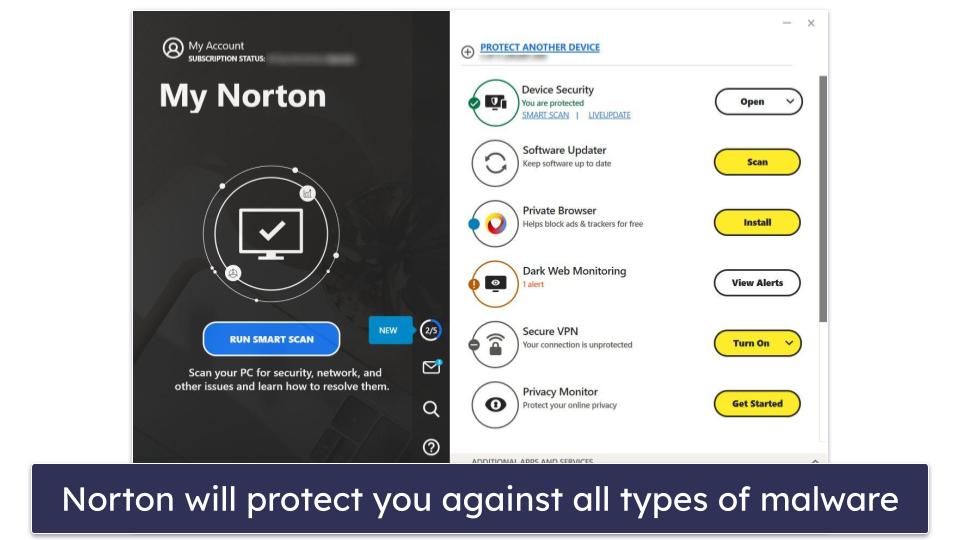
While client-side hacking is a risk, server-side hacking isn’t something you need to worry about with a reputable password manager like RoboForm or Dashlane. These managers use secure end-to-end encryption, making your information completely uncrackable on a password manager’s servers. Therefore, even if hackers successfully breach your password manager’s servers, your information should remain secure.
Tips on How to Further Secure Your Password Manager
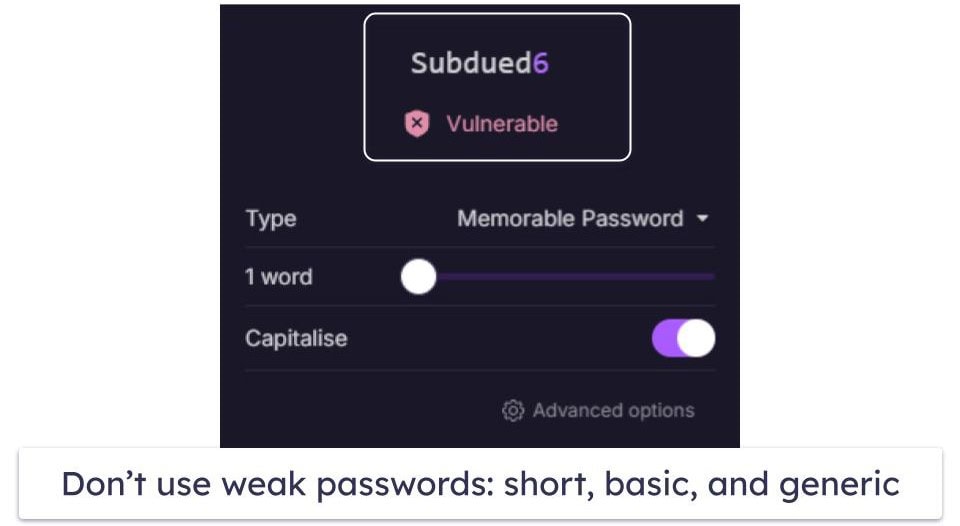
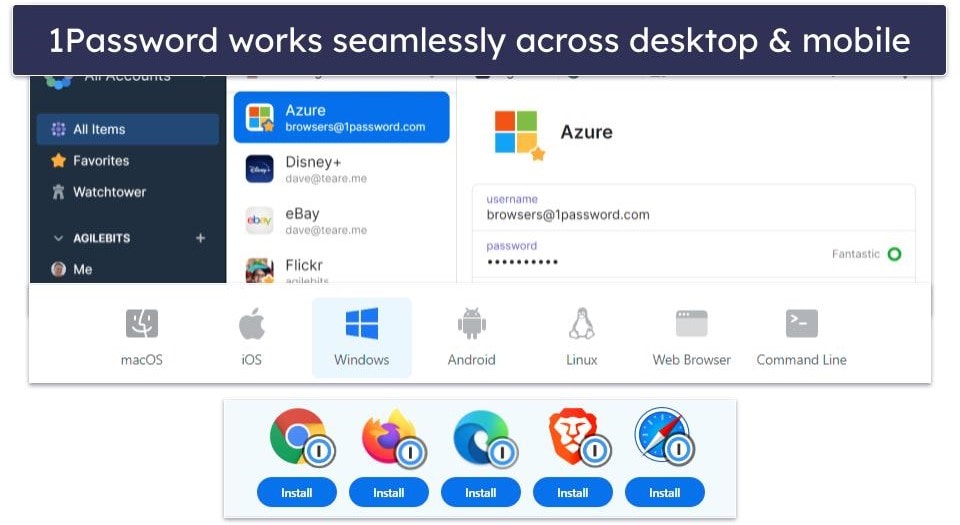
It’s essential to create a strong master password. Password managers like 1Password help users create a strong and unhackable master password with useful on-screen instructions, and it flags any master password that’s too short, overly simplistic, or a duplicate of a password already stored in the vault.
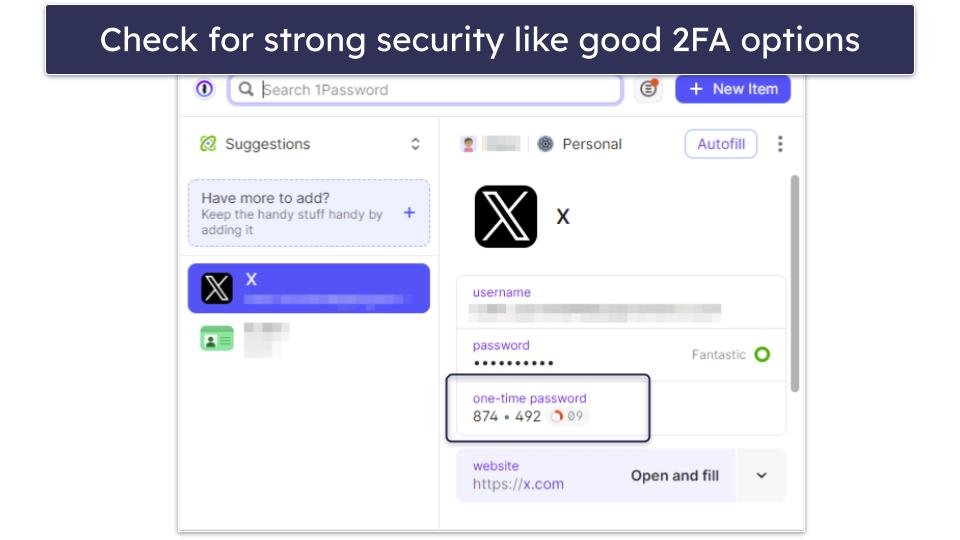
You can strengthen your master password’s security with two-factor authentication (2FA). 2FA requires users to provide a second piece of verification in addition to their login information, such as a biometric scan, a temporary one-time password (TOTP), or a USB token like Yubikey. Using 2FA to secure your password manager ensures that even if your master password is compromised, your password vault remains protected.
The best password managers offer a variety of 2FA methods to enhance login security — USB and biometric scans are considered among the most robust forms of 2FA due to their difficulty to duplicate (1Password supports both).
It’s also important to make sure that none of your passwords are weak — for instance, if you’ve been using “MyCat’sName1234” across multiple accounts, it’s time to change that. Password vault auditing tools can analyze each of your stored logins and flag any repeated, weak, or generic passwords, allowing you to replace them before they’re potentially compromised.
Finally, you need to maintain your vault’s security. Most top-rated password managers provide breach monitoring tools that instantly notify you if any of your passwords are leaked in a public data breach — Dashlane even has a live dark-web monitoring team, which scans hacker forums for private data breaches.
And that’s it! Once you’ve selected a strong master password, set up good 2FA protection, audited your password vault, and activated data breach monitoring, your password manager is about as secure as it can possibly be.
How to Choose the Best Password Manager for Your Needs
- Check for strong security measures. All of the password managers on this list come with 256-bit AES encryption, provide two-factor authentication (2FA), and employ a zero-knowledge architecture, ensuring your passwords are safe from prying eyes.

- Look out for valuable extra features. Beyond the industry-standard features like encryption and auto-fill, I’ve selected password managers that offer additional security tools. These include password vault auditing, advanced 2FA options, and data breach monitoring. Some even come with unique features; for instance, 1Password offers hidden vaults and virtual payment cards, and Dashlane includes a VPN for added online privacy.
- Make sure it’s easy to use. A password manager should simplify your life, not complicate it. All recommended options have user-friendly interfaces and intuitive apps for major platforms.
- Compatibility. An effective password manager should offer full-featured applications for both desktop and mobile. Each of the top contenders I’ve selected operates seamlessly across all operating systems and devices.

- Look for the best value. The best password managers provide a balance of competitive pricing, a strong suite of features, and customer-friendly policies like free trials or money-back guarantees.
Frequently Asked Questions
What is the main risk of using a password manager?
The biggest risk of using a password manager is getting your master password cracked or stolen — if this happens, your entire vault can be accessed. The master password (which is used to unlock your password manager) is vulnerable if it’s too weak, and it can also be compromised through a phishing attack, a data breach, or a malware infection. To avoid these situations, use a strong, unique master password (12 or more characters, including numbers and symbols) and install a top antivirus (Norton is my favorite) to keep your system clean from malware.
Does a password manager know all of your passwords?
No, a good password manager employs zero-knowledge architecture and end-to-end encryption, ensuring it cannot access your passwords. All of the password managers on this list rely on zero-knowledge architecture and end-to-end encryption to maximize user security. So, while your password manager stores and auto-fills your credentials, the developers behind the app remain unaware of the contents of your encrypted password vault.
How safe is Google Chrome password manager?
Google Chrome’s built-in password manager is reasonably secure — it uses strong encryption, and Google offers the option to protect accounts with TOTP 2FA apps like Google Authenticator. However, Google doesn’t offer advanced features like detailed password vault auditing and comprehensive dark web monitoring, and it doesn’t sync well across devices and browsers.
Also, Google Chrome’s password generator is very basic and doesn’t offer the same customization options to generate complex passwords as top standalone password managers like RoboForm.
What if a password manager is hacked?
In the event of a password manager’s servers being hacked, your stored logins are still safe. The top password managers protect your personal data with 256-bit AES encryption, which is the same encryption standard used by banks and militaries. So, if a password manager’s server is hacked, all of your information is unreadable.
If your password vault is hacked, contact your password manager’s customer support, change your master password, and consider deleting your account. To prevent your password manager from being hacked, I strongly advise that you combine a strong, unique master password (that’s at least 12 characters long and includes random numbers and symbols) with 2-factor authentication (2FA). Also, I recommend that you install an antivirus like Norton to prevent hackers from using malware to steal your master password.





